
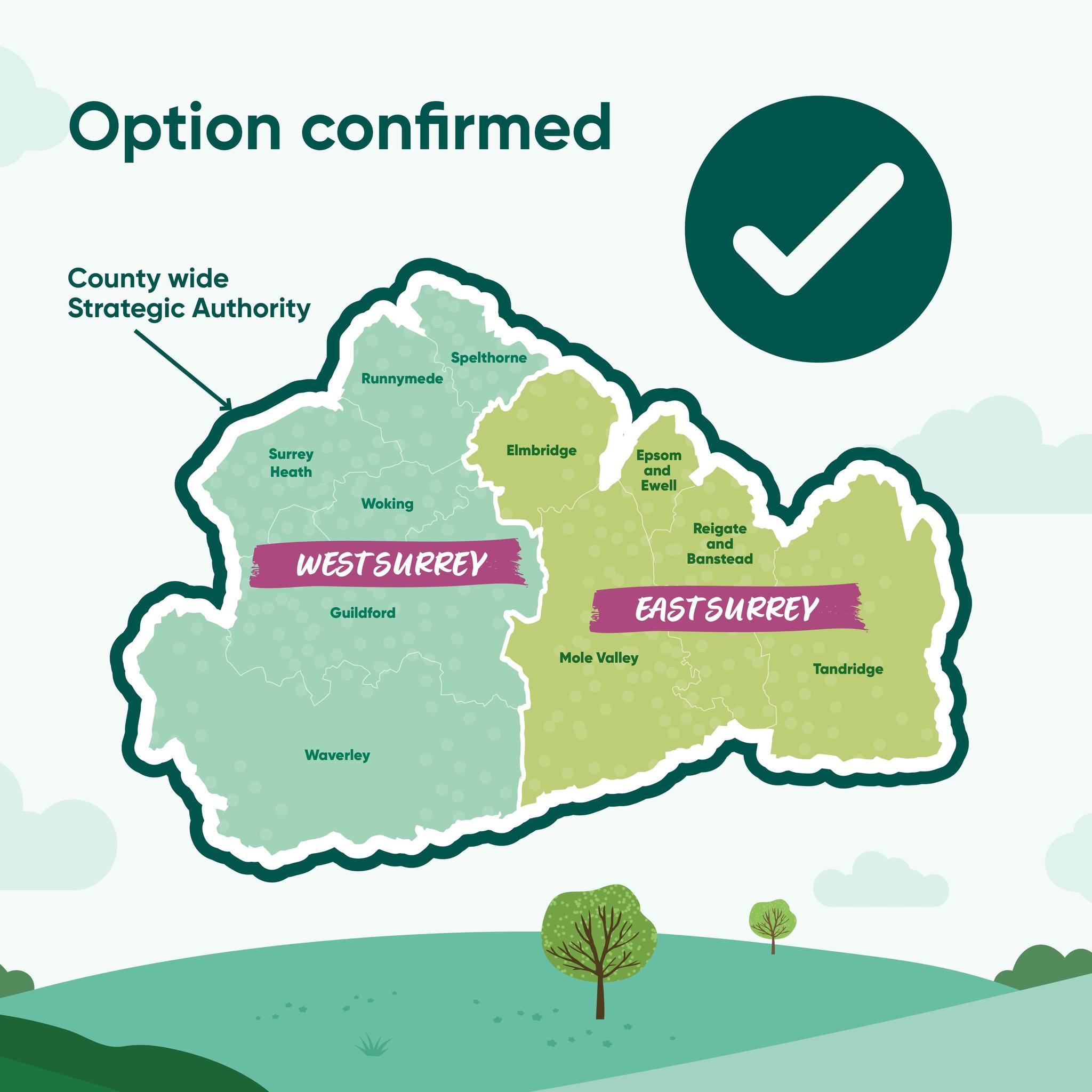
We have today written to the Secretary of State, Steve Reed, regarding the ongoing programme of local government reorganisation in England.
Our correspondence highlights the importance of accurately recognising historic county identities in the naming of new and revised administrative authorities.
A Positive Example
In particular, we drew attention to the encouraging proposal for a new ‘West Surrey’ authority which acknowledges that it extends beyond the historic county of Surrey and into Middlesex, with council members agreeing their preference for the council to be named ‘West Surrey and South Middlesex’.
This represents a welcome step towards greater accuracy and transparency. Too often, administrative areas are given names that suggest they represent a single historic county, when in reality they include territory from several.
Recognising this in the naming is a matter of simple geographic honesty.
Why Accurate Naming Matters
Historic counties are not administrative constructs, but long-established geographic units that have shaped identity and place for many centuries.
The Office for National Statistics records historic counties separately from administrative geography and recommends them as a stable, unchanging geography for historic, traditional or cultural use.
Administrative areas, by contrast, are frequently reorganised, renamed, or replaced. When such areas adopt county names without reflecting their true extent, it can lead to confusion and a gradual erosion of public understanding.
Ensuring that names accurately reflect geography helps to:
- Preserve historic county identities
- Improve public understanding of place
- Avoid misleading or incomplete descriptions
A Principle for Wider Reform
In our letter, we have urged that the approach taken in this case should not be an isolated example, but a principle applied consistently across the country.
Where a new authority covers areas from more than one historic county, its naming should reflect that reality — or at the very least avoid implying that it represents only one.
This is a practical and achievable step that would significantly improve the clarity and integrity of local government geography.
Looking Ahead
As reorganisation progresses, there is a clear opportunity to ensure that administrative changes do not come at the expense of historic identity.
We will continue to engage constructively with government on this issue and advocate for naming conventions that reflect the geographic extent and identities of Britain’s historic counties.