
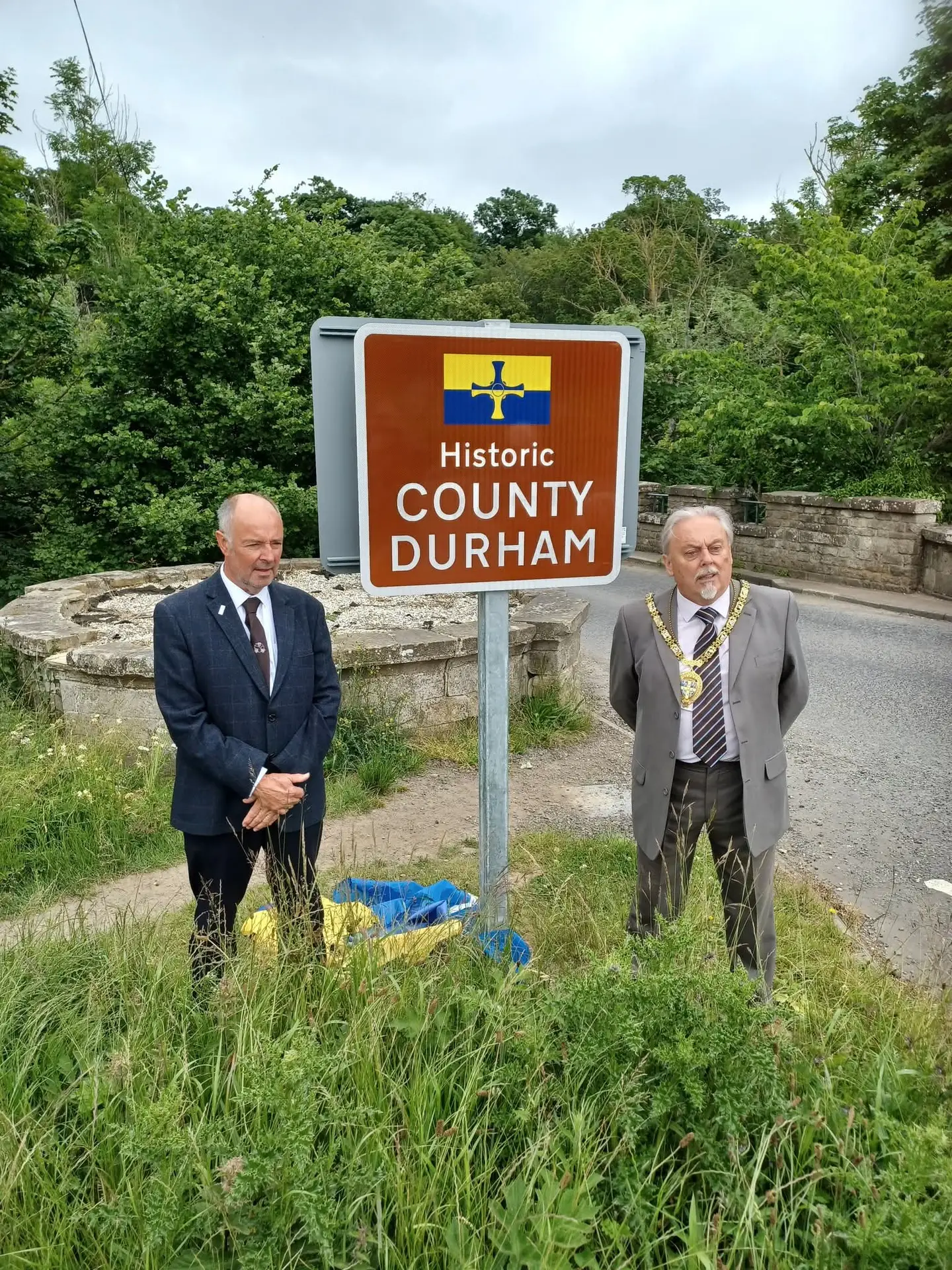

New road signs marking the historic border between County Durham and the North Riding of Yorkshire have been unveiled in Teesdale, restoring visible recognition to one of northern England’s great county boundaries.
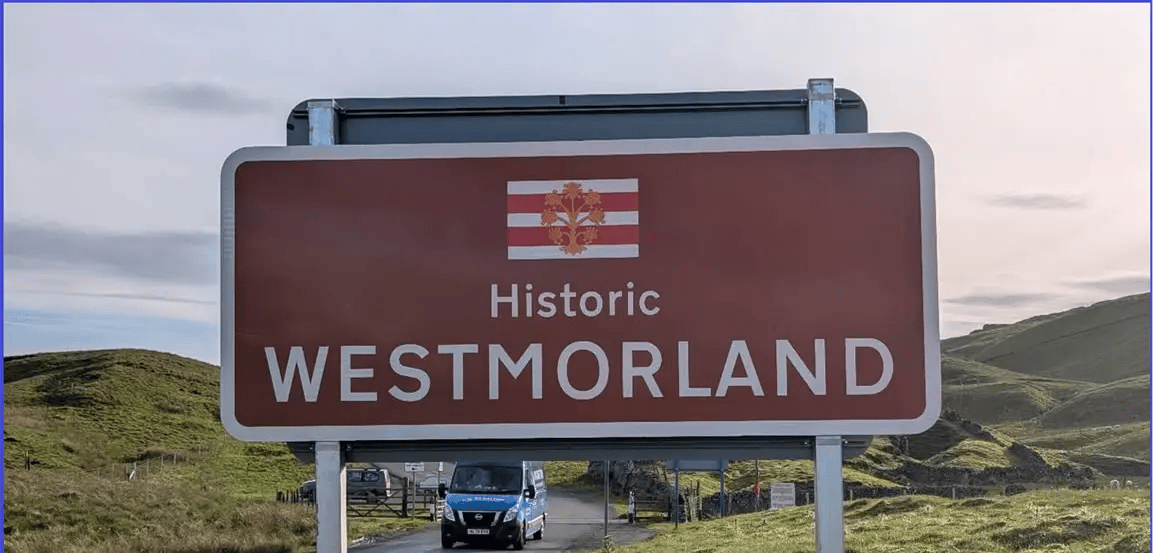
Six crossings of the River Tees have now been marked with new signs showing the border between County Durham and the North Riding of Yorkshire. Two further signs have also been erected at Ley Seat Edge, marking the historic border between the North Riding of Yorkshire and Westmorland.
The project was instigated by the Yorkshire Ridings Society, funded by the Historic Counties Trust and undertaken by Durham County Council. All three deserve warm thanks and congratulations for bringing this important and highly visible recognition of the historic counties back to the roadside.
The new signs mark the River Tees crossings at Winston Bridge, Worlton Suspension Bridge, Egglestone Abbey Bridge, County Bridge, Eggleston Bridge and Middleton Bridge.
A ceremonial unveiling took place on Monday 15 June 2026 at Egglestone Abbey Bridge. The signs were unveiled by Councillor Robbie Rodiss, Chairman of Durham County Council, who spoke about the importance of history and heritage to our sense of belonging, continuity and place.
Also present were Higher Teesdale councillor Richard Bell, former ceremonial mayor of Stockton-on-Tees Borough Council Ross Patterson, and representatives from the Historic Counties Trust and the Yorkshire Ridings Society.
Peter Boyce of the Historic Counties Trust said:
Could one even imagine our country without Yorkshire and County Durham? Not just beloved by the people who call them home, but by all Britons. We are very grateful to Durham County Council for marking the ancient border between them and to Councillor Rodiss for unveiling the new signs at Egglestone Abbey Bridge.
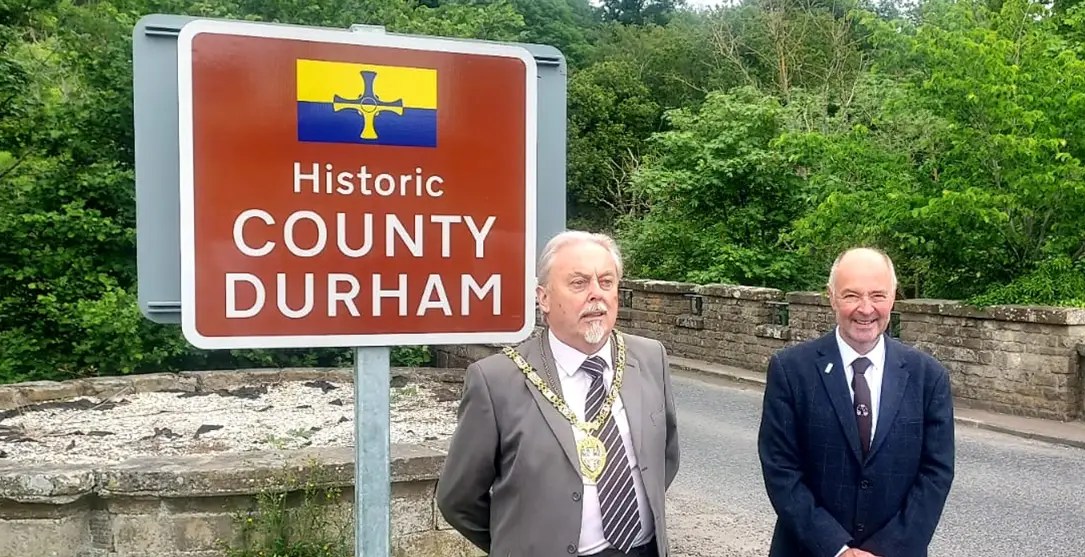
Nigel Wilkin of the Yorkshire Ridings Society said:
The River Tees has marked the border between County Durham and the North Riding of Yorkshire for over a thousand years. Despite the indelible place of our two great counties in our history and our hearts, this border has not been properly marked for over 50 years. We are overjoyed to see this omission rectified.
A spokesperson for the Historic Counties Institute said:
This is exactly the kind of practical, public recognition the historic counties deserve. These signs do more than mark a line on the road: they tell residents and visitors where they are, they honour the identity of the places they pass through, and they restore visibility to a geography that has shaped local life for centuries.
We warmly congratulate the Yorkshire Ridings Society, the Historic Counties Trust, Durham County Council and the councillors who have supported this project. But the larger lesson is that this should become normal practice. Historic county boundaries should be marked locally and nationally by public bodies as a matter of course, not only where local enthusiasm happens to be especially strong. The historic counties are part of the public geography of Britain, and their recognition should be consistent, official and enduring.
Peter Boyce also paid tribute to Councillor Ross Patterson, whose fundraising helped make the signs possible:
We also wish to warmly thank Councillor Ross Patterson. During his year as the ceremonial mayor of Stockton-on-Tees Borough Council, Ross raised over £14,000 for the erection of historic county road signs and kindly donated that money to the Historic Counties Trust. Some of that money has funded these signs.
At Councillor Patterson’s suggestion, Stockton-on-Tees Borough Council has already erected North Riding of Yorkshire and County Durham signs at most crossings of the River Tees in its area.
The Teesdale signs form part of a larger project to see all Yorkshire riding borders marked, and to extend historic county border marking to other counties as funding and cooperation from local authorities allow.
For the Historic Counties Institute, the long-term aim is clear: historic county boundaries should be recognised openly, consistently and officially across the country. Road signs are one of the simplest and most effective ways to do that.
County borders are not obscure lines of antiquarian interest. They are part of the geography through which people understand where they live, where they come from and where they belong. The River Tees has marked the border between County Durham and the North Riding of Yorkshire for over a thousand years. Thanks to this project, that fact is once again visible to everyone who crosses it.