
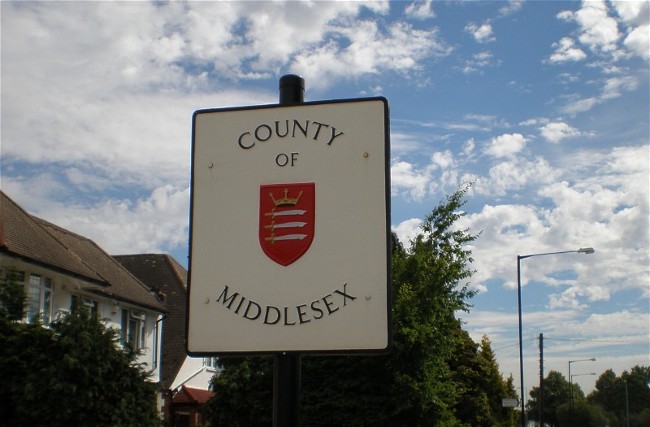
Recent proposals for local government reform have produced a welcome and significant development: recognition that so-called ‘West Surrey’ administrative arrangements extend beyond the historic county of Surrey and into Middlesex.
This is a small but important step towards restoring accuracy and honesty in how places are described.
Recognising Reality
For too long, administrative areas have been given names that suggest they represent a single historic county, even where that is clearly not the case. This has contributed to widespread confusion about the true geography of Britain.
In this instance, the proposed naming acknowledges a simple fact: the administrative area in question is not confined to Surrey, but also includes part of Middlesex. Recognising this in the name is a matter of basic geographical accuracy.
Why It Matters
Historic counties are not administrative conveniences. They are long-established geographic units, many of which date back over a thousand years.
Unlike council areas, which are frequently reorganised, renamed, or abolished, historic counties provide continuity, identity, and a stable framework for understanding place.
Failing to reflect those counties accurately in administrative naming risks:
- Misrepresenting local identity
- Obscuring historic geography
- Reinforcing the misconception that council areas define counties
By contrast, acknowledging the presence of more than one historic county – as in this case – helps to correct these misunderstandings.
A Broader Issue
This example highlights a much wider problem. Across Britain, many administrative areas continue to use county names in ways that are incomplete or misleading.
Where an authority covers territory from multiple historic counties, its name should reflect that reality — or at the very least avoid implying that it represents only one.
Accurate naming is not a trivial matter. It is fundamental to preserving the distinct identities and histories of Britain’s counties.
The Next Step
The proposal now awaits approval from the Secretary of State, Steve Reed.
The Campaign for Historic Counties will be writing to him in support of this approach, both in this specific case and more broadly. We will continue to advocate for naming conventions that reflect true geographic county identities, rather than administrative convenience.
Conclusion
This development represents a welcome victory for common sense.
It shows that it is both possible – and reasonable – to ensure that administrative naming reflects the real, historic geography of the country.
We hope this marks the beginning of a more consistent and accurate approach across future local government reforms.